


Advanced LiFePO₄ Battery Technology for Energy Storage and Safety
Advanced LiFePO₄ battery technology | smart BMS & energy storage solutions - Maxtela
There are many benefits to using a Lithium Iron Phosphate (LiFePO4) batteries compared to lead acid batteries and other lithium batteries. As a result the technology is being used increasingly for a huge number of varied applications. It's necessary to look at it advantages while selecting a lithium battery technology, realizing why put such as a lead acid battery or a nickel metal hydride battery (NiMH battery) aside.
Lithium iron Phosphate batteries(LiFePO4 or LFP) offer lots of benefits
Advanced LiFePO₄ battery technology | smart BMS & energy storage solutions - Maxtela
HIGN ENERGY DENSITY
Lithium battery is capable to keep the greater energy within the same size constraints.
LIGHTWEIGHT
Maxtela battery technology has a greater capacity and range. Significantly reduced the weight of industrial machinery.
EASY OPERATION AND LOW MAINTENANCE
No requirement for Priming, Watering or Equalization, the lithium batteries are supplied operationally and ready to go.
LOW SELF-DISCHARGE
Much lower than that of other rechargeable batteries, its discharge rate per month fails to a figure of around 1 or 2%.
LONGER LIFE SPAN
Longer service life compared to other batteries, the cyclelife is up to 3000 times at the remaining of 80% DOD (Depth of Discharge).
EXTREMELY SAFE
As Lithium iron phosphate battery has chemical stability improved and superior thermal performance compared to lead acid or other lithium batteries.
LOAD CHARACTERISTICS
The load characteristics of lithium cells or batteries are very good. They provide a fairly constant voltage against the last charge is used before the energy falling.
High power performance with long cycle life
| LEAD-ACID BATTERY | LITHIUM BATTERY | |||
| HIGH C RATE PERFORMANCE | LONG recharge time or BATTERY REPLACEMENT FREQUENT | FAST charging complete CHARGE C Rate up to 1 to 3C | ||
| ENERGY EFFICIENCY | LOW energy efficiency (75%) | HIGH energy efficiency (95%) | ||
| MAINTENANCE | HIGH maintenance and infrastructure costs | LOW maintenance and infrastructure costs | ||
| SERVICE LIFE | SHORT service life 1000 TIMES OF CHARGE CYCLE | LONG service life 3000 TIMES OF CHARGE CYCLE | ||
| THERMAL CHARACTERISTIC | NARROW temperature ranges | WIDE temperature ranges | ||
| CHARGE/DISCHARGE PERFORMANCE | Partial charge / discharge SHORTEN BATTERY LIFE | Partial charge / discharge INCREASE BATTERY LIFE |
Applications of Advanced Lithium Battery Technology
Why LiFePO₄ Battery Technology Matters
Thermal management and safety features
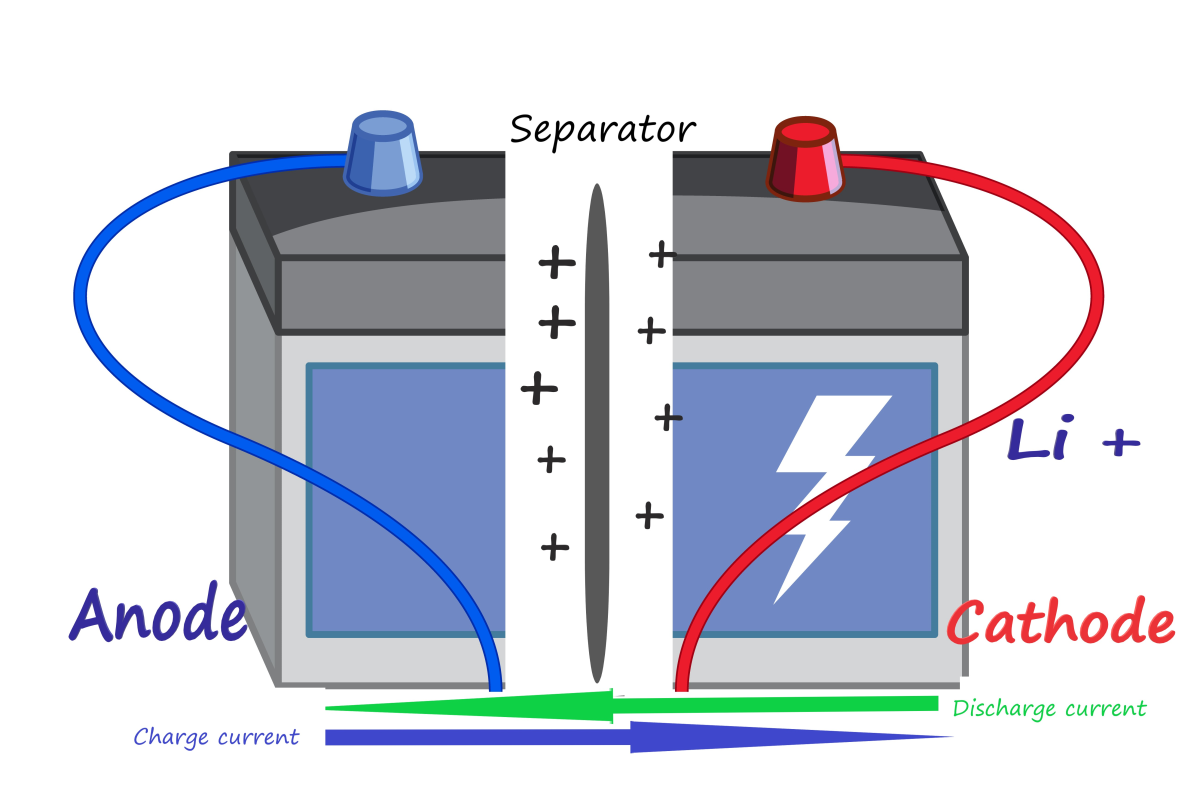
A simple description of a lithium-ion battery, a rechargeable battery type with a negative electrode (anode) and a positive electrode (cathode) that moves lithium ions between the two materials. Typically, the lithium ions moving from anode to cathode is called discharge, then deposit itself into the positive electrode, composed of lithium and other metals. During charge, this process is reversed.
Applications of advanced lithium battery technology
Inside the battery, there are many layers of anode and cathode with separators in between. Between the two plates, there is also an electrolyte solution, usually a mixture of LiPF6 and liquid solution. This combination of materials can be stacked (prismatic cells) or wound into a spiral (cylindrical cells). Cells vary in size and shape; some are enclosed in plastic, others in aluminum cases. The housing is depending on the environment they are going into, and size is decided by the capacity required for the application.
Each Lithium Ion cell has a safe voltage range in which it can operate. This range depends on the chemistry used in the battery. For example, an LFP battery at 0% state of charge (SOC) is 2.5V and at 100% SOC it is 3.6V. This is considered a safe operating range for this battery. Below the specified 2.5V SOC will cause the electrode degradation. This is considered overdischarge. If the cell is repeatedly overdischarged, it can cause many problems that can permanently damage the battery. The same goes for an overcharge, beyond the stated 100% SOC. These two failures are key factors while the battery manufacturers develop the battery solution.
A Lithium Iron Phosphate battery (often abbreviated as LiFePO4 battery chemistry; or further abbreviated as LFP battery, which stands for Lithium Iron Phosphate) is a type of lithium-ion battery whose positive electrode material is made of Lithium Iron Phosphate. Now we know the difference between "lithium ion" and "lithium iron", let’s find out what LiFePO4 battery packs are able to provide while operating the equipment or working compared to other battery types.
Lithium Iron Phosphate Chemistry Advantages
To prevent the loss of energy efficiency as well as fully make use of the energy owned by battery itself, Maxtela technology of dynamic equalization is designed into the battery system in some Maxtela's lineup, for example, Maxtela Advanced Lithium Battery series (ALB Series), which offers the fast balancing time responding the differences in the cells between. Furthermore, in order to eliminate the potential problems of the different conditions (different voltage or resistances)on cells while the charge and discharge, our battery system acts in active plus passive power balancing method during charge which slows down the rate at which the energy decreases over time, that meant to improve the loss of range for vehicles and machineries at each cycle. In general, at that moment, it controls the quick balancing charge in a limited time at each cycle, so that didn't significantly change its overall recharge time but prolonged the entire battery life cycle.
HIGHER SECURITY RACK MOUNT CABINET
Maxtela continuously strives to break through the performance of batteries, to put lithium batteries with larger capacity, smaller volume, much safer and longer service life into the metal battery rack or cabinet, completely integrating the best performance with compact and flexible features, and the stackable product size with the excellent advantages in size, deployment, operation and maintenance, and cost, which provide more sustainable choices of energy storage power for different needs of customers to choose.

SPEAK TO OUR BATTERY EXPERTS
We are lovely to hear from you whether you have a question about our battery products or whether you’re looking for a battery for your particular application. Please feel free to contact us or complete the form to message us directly. We have experts in lithium iron phosphate and lithium ternary batteries.


